LA Wildfires One Year Later: One year ago, Los Angeles County experienced its worst nightmare. On January 7, 2025, powerful Santa Ana winds transformed small brush fires into massive urban conflagrations that would change Southern California forever. The Palisades Fire and Eaton Fire, fueled by hurricane-force winds exceeding 80 mph and bone-dry conditions, tore through wealthy coastal neighborhoods and working-class communities alike, leaving devastation in their wake.
Today, as survivors mark this somber anniversary, the recovery remains frustratingly slow and uneven. While some progress has been made, the path to rebuilding has exposed deep systemic challenges that continue to test the resilience of fire-affected communities.
The Devastating Toll: By the Numbers
The statistics from the 2025 Los Angeles wildfires paint a grim picture of destruction. Approximately 59 square miles burned across multiple fires, with the Palisades and Eaton fires causing the most catastrophic damage. The human cost was staggering: 31 people died directly from the fires, while an estimated 440 total deaths resulted from fire-related causes including heart and lung conditions aggravated by smoke and stress.
More than 17,000 homes were destroyed, seriously damaged, or rendered uninhabitable. Over 200,000 residents were forced to evacuate, and shockingly, as of October 2025, approximately 70 percent of displaced residents still cannot return home. The economic impact has been equally devastating, with total property and capital losses estimated between 76 billion and 131 billion dollars, including up to 45 billion in insured losses.
Recovery Progress: Small Steps Forward
Despite the overwhelming challenges, Los Angeles County has made notable strides in supporting survivors. The county established LA County Recovers in January 2025 to coordinate efforts across departments and partner with federal, state, and local agencies. One-Stop Permit Centers were created where residents can meet directly with county staff to discuss rebuilding plans and obtain necessary permits.
According to county officials, more than 2,800 permit applications have been submitted over the past year, with over 1,100 rebuilding permits issued to residents moving forward with reconstruction. The One-Stop Permit Centers have assisted more than 14,000 residents throughout the year, providing crucial guidance through the complex rebuilding process.
Governor Gavin Newsom issued 27 executive orders over 12 months to streamline state laws, remove red tape, and accelerate recovery. Local governments are now issuing rebuilding permits nearly three times faster than comparable permits issued in the five years before the fires, with reviews averaging under 30 days.
The Harsh Reality: Why Recovery Remains Slow
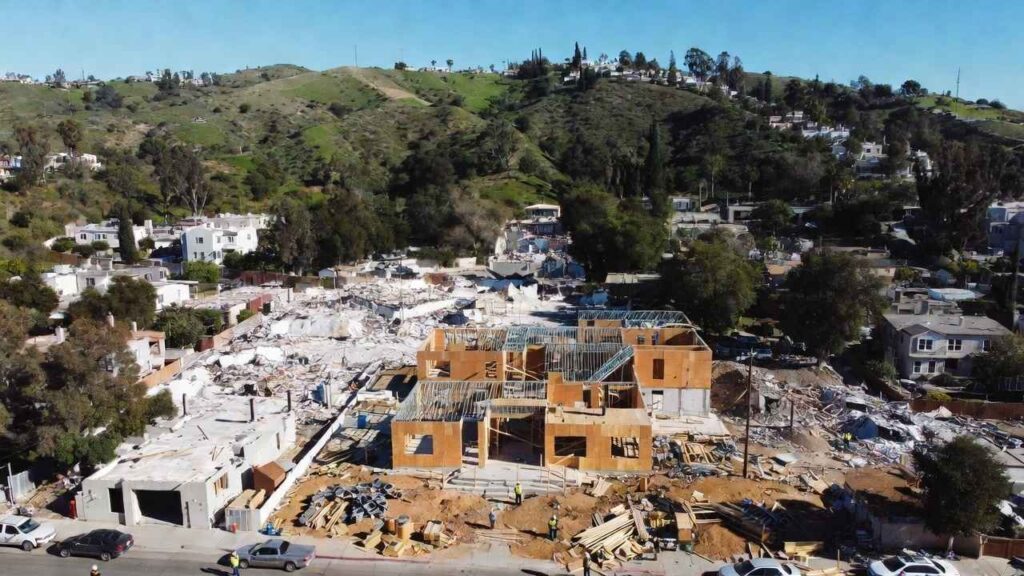
Despite these efforts, fewer than 1,000 actual buildings are under construction one year later. The recovery has been hampered by numerous obstacles that survivors must navigate, creating what many describe as a frustrating patchwork of systems.
Insurance battles have emerged as a major roadblock. Many homeowners report prolonged fights with insurers to get their claims paid, delaying their ability to begin rebuilding. The complexity is compounded by the fact that fires burned across multiple jurisdictions, forcing survivors to navigate different city and county agency regulations.
Home values in fire-ravaged areas have plummeted dramatically. In the Palisades Fire burn scar, average home sales dropped from 3.6 million before the fires to 2.4 million by October 2025, a 33 percent decrease. The Eaton Fire zone saw an even steeper decline, with average home sales falling from 1.8 million to around 684,000, a shocking 62 percent drop.
Foreclosures have increased significantly, with at least 121 mortgage foreclosures recorded in the Eaton Fire burn scar and 91 in the Palisades Fire area between January and September 2025. This financial pressure has pushed many survivors toward difficult decisions about their futures.
Environmental and Health Concerns
The aftermath of the fires extends beyond physical destruction. Toxic debris remains a persistent concern in affected areas. Research has shown that chemicals from the smoke lingered inside homes long after the wildfires were extinguished, creating ongoing health risks for residents who have returned or are attempting to rebuild.
The fires affected millions of people in the region, and experts warn it could take years to fully understand the health consequences. However, ongoing research is helping prepare communities to weather future fires more safely, providing valuable data on smoke exposure, air quality impacts, and protective measures.
Federal Funding Frustrations
Adding to survivors’ challenges, the federal response has been criticized as inadequate. Governor Newsom has publicly called out the White House for failing to approve long-term disaster funding for survivors. This marks the fourth request for funding since February 2025, when President Trump initially promised he would “take care” of survivors.
Some fire victims also report an inadequate response by FEMA, which has been affected by funding and staffing cuts under the Trump Administration. This has left many survivors feeling abandoned as they struggle through the one-year mark without the comprehensive federal support typically provided after major disasters.
Lessons Learned: Building Back Better
The 2025 Los Angeles wildfires have exposed critical vulnerabilities in California’s approach to wildfire prevention and urban planning. Experts point to several institutional and policy failures that worsened the crisis, including inadequate water infrastructure for large-scale firefighting and insufficient monitoring of utility lines that may have contributed to fire ignition.
Los Angeles’s wildfire risks are amplified by its unique ecology, particularly the chaparral biome and arid climate, which foster highly flammable vegetation. The rapid population growth in the wildland-urban interface, where residential development meets fire-prone landscapes, has dramatically increased exposure to fire hazards.
Community activists like Maryam Zar have formed citizen groups such as the Palisades Community Coalition to give residents a greater say in reconstruction. “If we don’t strategize this recovery, what we’re going to end up having is only people who can afford to buy land and build a big house,” Zar explained. “We need to rebuild and we need a plan to rebuild swiftly and quickly. But we also need to build back better and be more resilient next time.”
Looking Ahead: Resilience and Preparation
California has implemented some of the most robust fire codes for areas exposed to wildfire hazards, and many of these have been expanded following the fires. Meeting current Zone Zero standards will help ensure resilience against future hazards, though experts caution it won’t eliminate vulnerability completely.
As Santa Ana winds returned to Southern California in early January 2026, nearly a year to the day after the original disaster, residents experienced a bittersweet reminder. However, unlike last year’s bone-dry conditions, recent record rainfall has saturated soils this year, rendering weather-driven wildfire threats virtually nonexistent for now.
The one-year anniversary has renewed pressure on local leaders to create a more cohesive recovery plan. Survivors and experts agree that without significant reforms and strategic planning, California remains vulnerable to future catastrophic fires. The devastating losses experienced in January 2025 serve as a stark warning about the urgent need for comprehensive wildfire prevention, improved infrastructure, and smarter urban development policies.
For the thousands of families still displaced, still fighting insurance companies, still waiting for permits, the recovery journey continues. Their resilience in the face of bureaucratic obstacles, financial pressures, and emotional trauma stands as a testament to the strength of these communities. As Los Angeles rebuilds, the hope is that the lessons learned from this tragedy will create a safer, more prepared region for generations to come.