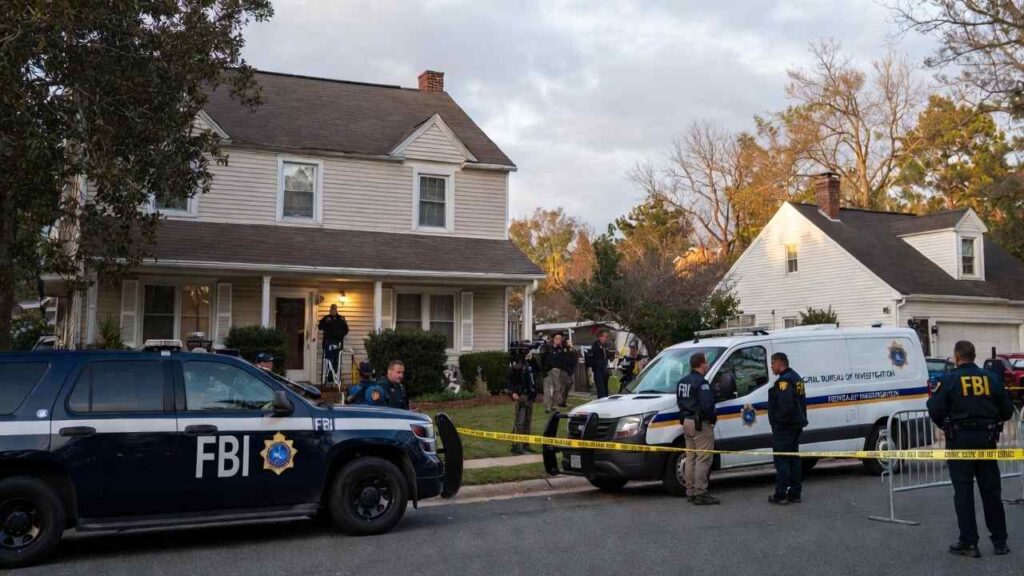
FBI Raids Washington Post Reporter: In what press freedom advocates are calling an extraordinary and deeply troubling development, FBI agents raided the Virginia home of Washington Post reporter Hannah Natanson early Wednesday morning, seizing electronic devices as part of an investigation into a government contractor accused of illegally retaining classified materials.
The unannounced search, confirmed by Washington Post executive editor Matt Murray in an internal email, has ignited fierce debate about the Trump administration’s approach to journalism, the boundaries of press freedom, and the lengths federal law enforcement will go to pursue leak investigations.
“This extraordinary, aggressive action is deeply concerning and raises profound questions around the constitutional protections afforded to journalists,” Murray wrote to Post staff. The incident marks one of the most aggressive federal actions against a reporter in recent memory, drawing immediate condemnation from journalism organizations, constitutional scholars, and media advocacy groups across the political spectrum.
What Happened: The Early Morning Raid
According to sources familiar with the operation, FBI agents appeared at Natanson’s home without prior warning in the early morning hours. The agents executed a search warrant, went through her residence, and confiscated electronic devices including computers and phones that likely contain confidential source communications, unpublished reporting materials, and personal information.
The raid was conducted as part of a broader investigation into a government contractor suspected of illegally retaining classified government materials. While the FBI has not publicly identified the contractor or specified what classified information is at issue, the decision to raid a journalist’s home rather than pursue information through less invasive means has shocked legal experts and press freedom advocates.
Hannah Natanson, an education reporter for the Washington Post, has covered topics including schools, educational policy, and student issues. It remains unclear what connection, if any, her reporting has to the classified materials investigation or whether federal authorities believe she received or published classified information.
The Legal Framework: Shield Laws and Press Protections
The raid raises critical questions about the relationship between law enforcement investigations and First Amendment press protections. While the Supreme Court has never recognized an absolute reporter’s privilege to protect confidential sources, Department of Justice guidelines have historically imposed strict limitations on seeking information from journalists.
For decades, DOJ regulations required federal prosecutors to exhaust all reasonable alternative sources before subpoenaing journalists or seeking search warrants for their materials. These guidelines, strengthened after controversial leak investigations during the Obama administration, were designed to protect press freedom while still allowing legitimate law enforcement activities.
However, critics note that these guidelines are internal DOJ policies, not constitutional requirements, and can be modified or waived by political appointees. Legal experts are questioning whether proper approval was obtained for such an aggressive action against a reporter and whether less intrusive investigative methods were genuinely exhausted.
“Raiding a journalist’s home and seizing their devices is the kind of thing we associate with authoritarian regimes, not American democracy,” said a spokesperson for the Reporters Committee for Freedom of the Press. “This represents a tremendous intrusion into newsgathering activities and will have a chilling effect on investigative journalism.”
Historical Context: Government vs. Press
The tension between national security interests and press freedom has defined some of the most significant constitutional battles in American history. The Pentagon Papers case, the prosecution of whistleblowers under the Espionage Act, and various leak investigations have all tested the boundaries of what journalists can publish and how aggressively the government can pursue their sources.
The Obama administration faced heavy criticism for its aggressive pursuit of leakers, including obtaining phone records of Associated Press reporters and naming Fox News reporter James Rosen as a potential co-conspirator in a leak investigation. Those actions sparked bipartisan outrage and led to the strengthened DOJ guidelines on media investigations.
The Trump administration’s first term saw periodic threats against journalists and frequent attacks on the press as “enemies of the people,” but relatively few concrete legal actions against reporters themselves. However, Trump repeatedly called for prosecuting journalists who published classified information and suggested changing libel laws to make it easier to sue news organizations.
This raid suggests a significant escalation in the administration’s willingness to use law enforcement tools against the press, raising concerns about whether it represents an isolated incident or the beginning of a broader campaign to intimidate journalists and their sources.
Press Freedom Organizations Respond
The reaction from journalism and civil liberties organizations has been swift and emphatic. Within hours of the raid becoming public, major press freedom groups issued statements condemning the FBI’s actions and demanding transparency about the legal justification.
The Committee to Protect Journalists called the raid “a direct assault on press freedom” and urged the Justice Department to immediately return all seized materials and explain what approval process was followed. The American Civil Liberties Union described the action as “exactly the kind of government overreach the First Amendment was designed to prevent.”
Even organizations that typically avoid partisan stances have expressed alarm. The Society of Professional Journalists, which represents tens of thousands of reporters and editors across ideological lines, issued a statement warning that raids on journalists’ homes “strike at the heart of the public’s right to know what their government is doing.”
International press freedom monitors have also weighed in, with Reporters Without Borders noting that the United States has fallen in global press freedom rankings in recent years and that actions like the Natanson raid contribute to an increasingly hostile environment for journalism.
The Chilling Effect on Investigative Journalism
Beyond the immediate legal questions, press advocates warn that the raid will have a profound chilling effect on investigative journalism, particularly reporting on national security, intelligence, and classified matters. Sources who might otherwise provide information about government wrongdoing, waste, or abuse will be far less likely to speak with journalists if they believe doing so could result in FBI raids.
Journalists themselves may become more cautious about pursuing certain stories, knowing that their homes could be searched, their devices seized, and their confidential communications potentially exposed. This self-censorship, advocates argue, is precisely what the First Amendment is meant to prevent.
“When you raid a journalist’s home, you’re not just investigating one person – you’re sending a message to every reporter and every source in America,” explained a veteran investigative journalist who requested anonymity due to concerns about government scrutiny. “The message is clear: talk to reporters about sensitive topics at your own risk.”
The seizure of electronic devices is particularly concerning because modern journalism relies heavily on digital communications. Reporters’ phones and computers typically contain years of source communications, story drafts, research materials, and information about ongoing investigations into unrelated matters. All of this is now in government hands.
Political Implications and Partisan Divide
The raid has quickly become a political flashpoint, with responses largely breaking along partisan lines. Republican officials and conservative media figures have generally defended the FBI’s actions as a legitimate investigation into classified material leaks, arguing that journalists who receive and publish classified information should face consequences.
“Nobody is above the law, including reporters who traffic in stolen classified documents,” said one Republican congressman. “If the Washington Post received classified materials, they need to cooperate with federal investigators.”
Democrats and liberal commentators have framed the raid as an authoritarian attack on press freedom designed to intimidate journalists critical of the administration. They point to President Trump’s long history of hostility toward the press and suggest the raid reflects a politicized Justice Department willing to target administration critics.
“This is what happens when you have a president who views the free press as an enemy rather than a pillar of democracy,” argued one Democratic senator. “Today it’s the Washington Post, tomorrow it could be any journalist asking uncomfortable questions.”
The partisan divide obscures what press freedom advocates insist should be a bipartisan concern. Regardless of which party controls the White House, they argue, aggressive government actions against journalists threaten accountability and transparency that benefit all Americans.
The Contractor Investigation: What We Know
Details about the underlying classified materials investigation remain sparse. The FBI has not publicly identified the government contractor under investigation, what agency they worked for, or what classified information they allegedly retained improperly.
Federal law makes it illegal for individuals to retain classified documents without proper authorization, and prosecutions of government contractors and employees for mishandling classified materials are not uncommon. However, the connection between that investigation and the decision to raid a journalist’s home remains unclear.
Some legal experts speculate that prosecutors may be pursuing a theory that Natanson received classified information from the contractor and potentially violated laws against receiving or possessing classified documents. However, prosecuting journalists for publishing classified information has historically been considered extremely problematic under the First Amendment.
Other observers suggest the raid may be more about identifying the contractor’s other contacts and communications than about charging Natanson herself. By seizing her devices, investigators gain access to metadata, communication patterns, and potentially other sources who provided information.
What Happens Next: Legal and Practical Questions
The Washington Post has indicated it will vigorously challenge the search warrant and seek the return of all seized materials. The newspaper’s attorneys will likely argue that the seizure violates First Amendment protections and that any information obtained should be suppressed.
However, legal challenges face significant obstacles. Courts have historically been reluctant to second-guess law enforcement search warrants, especially in national security contexts. The government will argue it had probable cause to believe evidence of crimes would be found at Natanson’s residence, and that the search was properly authorized.
In practical terms, the FBI now has access to potentially years of Natanson’s communications with sources, editors, and colleagues. Even if some of this information is eventually deemed privileged and returned, the damage to source confidentiality and ongoing investigations may already be done.
The incident also raises questions about digital security practices for journalists. In an era when electronic communications can be seized with a single raid, how can reporters protect confidential sources? Should news organizations invest more heavily in encryption, secure communication platforms, and legal defense funds?
International Perspectives and Democratic Norms
Foreign observers and international press freedom organizations have noted that the raid places the United States in uncomfortable company. Authoritarian governments from Russia to China routinely raid journalists’ homes, seize their equipment, and use leak investigations to intimidate the press.
“When the United States engages in these tactics, it provides cover for repressive regimes around the world to do the same,” noted an international press freedom researcher. “We’re watching America’s credibility as a defender of press freedom erode in real time.”
The incident also complicates U.S. diplomatic efforts to promote press freedom abroad. How can American officials credibly criticize other countries for jailing journalists or raiding newsrooms when similar tactics are being employed at home?
The Stakes for Democracy
At its core, the raid on Hannah Natanson’s home represents a fundamental question about the role of journalism in American democracy. Can reporters effectively hold government accountable if they face criminal investigation for receiving information officials want kept secret? Does national security justify aggressive actions against the press, or do such actions themselves threaten democratic norms?
These questions have no easy answers, but the consensus among press freedom advocates is clear: raids on journalists’ homes should be extraordinarily rare, carefully justified, and pursued only when all other options have been exhausted. The apparent ease with which this raid was conducted suggests those standards may not have been met.
As this story develops, it will test whether traditional safeguards for press freedom remain robust in an era of political polarization and aggressive executive power. The outcome will help define what kind of journalism is possible in America and whether the First Amendment’s promise of a free press retains real force.
For now, journalists across the country are watching nervously, wondering if they could be next, and sources are reconsidering whether the risk of speaking truth to power is worth the potential consequences. That alone should concern anyone who values an informed citizenry and accountable government.