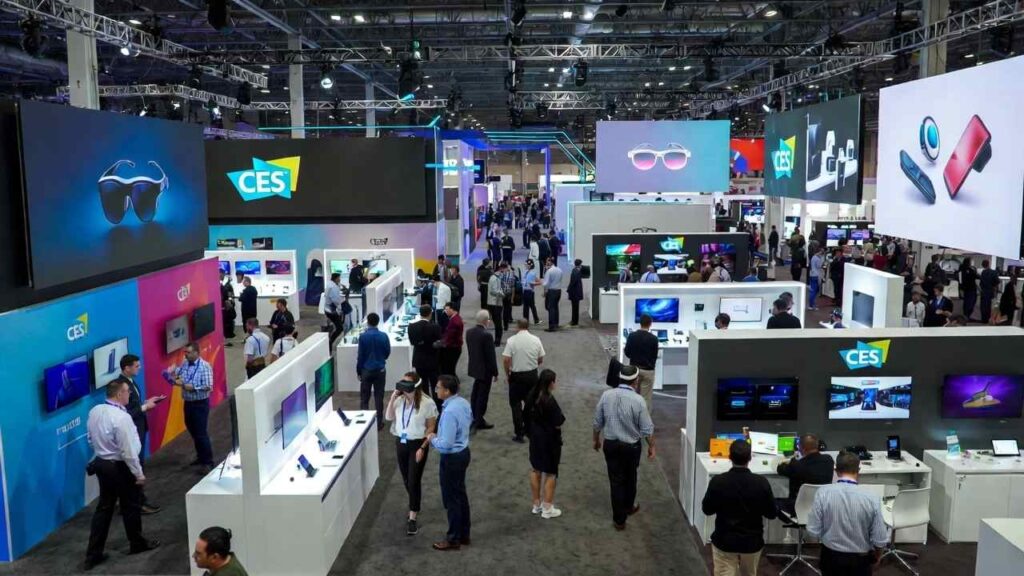
CES 2026 Tech Trends: The tech world’s biggest annual gathering has concluded, and CES 2026 delivered a clear message: the future is arriving faster than expected. From smart glasses that finally look and function like normal eyewear to foldable phones with invisible creases, this year’s Consumer Electronics Show in Las Vegas showcased innovations that will fundamentally change how we interact with technology in our daily lives.
The exhausted TechRadar team that covered the massive event has returned home with their notes, hands-on impressions, and predictions for what these innovations mean for consumers. While CES always features plenty of vaporware and unrealistic prototypes, this year felt different—the showcased technologies are closer to commercial reality than ever before.
Here are the 11 biggest tech trends from CES 2026 that will shape the technology landscape throughout the year and beyond.
1. Smart Glasses Finally Go Mainstream
After years of false starts, expensive failures, and limited functionality, smart glasses appear to have reached a true turning point at CES 2026 Tech Trends. The number and quality of smart glasses on display suggested that 2026 will be the year these devices move from niche curiosity to mainstream consumer product.
The highlights were impressive and varied. Asus unveiled the ROG Xreal R1 AR glasses featuring a stunning 240Hz refresh rate specifically designed for gamers, offering an immersive experience without the bulk of traditional VR headsets. These lightweight glasses overlay game information and virtual screens onto the real world, allowing gamers to enjoy massive virtual displays anywhere.
RayNeo showcased Project eSIM, teasing what could become the first truly phoneless smart glasses. By integrating cellular connectivity directly into the eyewear, these glasses could potentially eliminate the need to carry a smartphone for basic communications and information access.
Meta also announced a significant update to its Ray-Ban Display smart glasses during CES, though details about pricing and availability remain limited. The sheer number of companies presenting smart glasses variations—from fashion brands to tech giants—signals that the technology has matured enough for widespread adoption.
The key breakthrough enabling this smart glasses revolution is miniaturization. Displays, batteries, and processors have become small and efficient enough to fit into eyewear that looks relatively normal, addressing one of the biggest barriers to earlier adoption.
2. Samsung’s Revolutionary Creaseless Foldable Display
While phones don’t traditionally dominate CES, Samsung created major buzz by showcasing a folding OLED display with no visible crease—a holy grail for foldable phone technology that manufacturers have pursued for seven years.
The demonstration panel looked excellent in terms of overall quality and incorporated under-display camera technology, creating a seamless viewing experience when unfolded. Most importantly, the screen showed absolutely no crease at the fold point, a persistent problem that has plagued every foldable phone released to date.
Current foldable phones from Samsung, Motorola, and others all suffer from visible creases where the screen folds, creating a noticeable line that disrupts visual content and deteriorates over time. Samsung’s breakthrough technology could finally deliver the foldable experience consumers have been waiting for.
Ironically, while Samsung developed this technology, industry observers speculate that Apple could be the main beneficiary. Rumors of an iPhone Fold have persisted for years, and if Apple enters the foldable market with creaseless display technology, it could finally make foldables mainstream in Western markets.
The display technology is expected to appear in commercial products within the next 12-18 months, though Samsung has not committed to specific launch dates or products.
3. The Anti-Brain Rot Gadget Revolution
In a surprising trend that reflects growing concerns about smartphone addiction and social media’s impact on mental health, CES 2026 Tech Trends featured numerous “anti-brain rot” gadgets designed to help people disconnect from endless scrolling and digital overstimulation.
Mini e-readers emerged as a popular category, offering compact devices dedicated solely to reading books without the distractions of notifications, social media, or web browsing. These palm-sized readers provide a focused reading experience that smartphone apps cannot match.
The Clicks Communicator brought back the physical keyboard in a form factor reminiscent of BlackBerry devices, targeting professionals and nostalgic users who miss tactile typing. The device even includes a 3.5mm headphone jack, another feature that has become increasingly rare in modern smartphones.
Other nostalgia tech on display included Stern Pinball machines and My Arcade’s new mini Sega arcade cabinets, offering authentic gaming experiences without screens, subscriptions, or online connectivity.
These products reflect a broader cultural pushback against the attention economy and growing recognition that constant digital connectivity may be harming mental health, productivity, and genuine human connection.
4. Robots: Still Not Ready for Prime Time
Robots are a CES staple, and 2026 featured plenty of robotic demonstrations. Unfortunately, those demonstrations primarily proved that robots still aren’t ready for mainstream consumer adoption.
On the first day, attendees watched LG’s CLOiD robot take what felt like hours to place a single wet towel into a self-opening washing machine—a task any human could complete in seconds. The SwitchBot Onero H1 attempted to do laundry with similarly mixed results, struggling with basic manipulation tasks.
While robotics companies continue making progress on specific industrial applications, general-purpose home robots remain frustratingly limited. The technology can handle highly controlled environments and specific repetitive tasks, but struggles with the variability and complexity of typical household chores.
The disconnect between the robot demonstrations and actual utility has become a running joke at CES, with each year’s showcases revealing how far the technology still has to go before matching science fiction visions of helpful home robots.
5. Foldable and Rollable Displays Beyond Phones
While Samsung’s creaseless phone display grabbed headlines, CES 2026 featured flexible display technology applied to numerous other products. Rollable TVs that disappear into furniture, foldable laptop screens that expand into tablet mode, and curved gaming monitors with adjustable geometry all demonstrated the versatility of flexible OLED technology.
LG Display showcased a transparent OLED panel that can transition from clear to opaque, with potential applications in automotive design, retail displays, and architectural installations. The company demonstrated how these panels could serve as windows that double as information displays.
The expanding applications of flexible displays suggest this technology will become increasingly common across product categories, not just limited to phones and tablets.
6. AI Everywhere (But More Practical)
Artificial intelligence was predictably everywhere at CES 2026, but unlike previous years filled with vague promises and theoretical applications, this year’s AI demos focused on practical, specific use cases that actually solve real problems.
AI-powered translation devices showed impressive real-time language translation capabilities, making international communication more accessible. Smart home systems demonstrated genuinely useful predictive automation, learning user patterns to adjust heating, lighting, and appliances without constant manual programming.
Several companies showcased AI health monitoring systems that analyze sleep patterns, detect irregular heartbeats, and provide personalized wellness recommendations based on comprehensive biometric data.
The shift from “AI for AI’s sake” to “AI solving actual problems” marks a maturation of the technology and suggests we’re moving past the hype cycle into genuine utility.
7. Electric Vehicles and Autonomous Driving Progress
The automotive section of CES continues growing in importance, with numerous electric vehicle manufacturers showcasing new models and autonomous driving capabilities. This year featured several affordable EV options targeting mainstream consumers rather than just luxury buyers.
Autonomous driving demonstrations showed incremental progress, with Level 3 systems that can handle highway driving in good conditions becoming more common. While fully autonomous robotaxis remain years away, the technology for limited self-driving in specific contexts is improving rapidly.
Battery technology announcements promised faster charging times and longer ranges, addressing two of the biggest consumer concerns about electric vehicle adoption.
8. Health Tech Gets More Sophisticated
Wearable health technology moved beyond simple step counting to comprehensive biometric monitoring. New smartwatches and fitness trackers showcased at CES 2026 can measure blood glucose levels, detect early signs of illness, monitor stress hormones, and provide detailed sleep quality analysis.
Several companies demonstrated non-invasive health monitoring systems using advanced sensors and AI algorithms to detect potential health issues before they become serious. While medical device regulations remain a hurdle for some of these technologies, the trajectory clearly points toward consumer devices that provide medical-grade health insights.
Mental health monitoring also emerged as a focus area, with several devices claiming to track stress, anxiety levels, and emotional well-being through various biometric markers.
9. Sustainable Tech and Right-to-Repair
Environmental concerns and consumer frustration with disposable electronics drove a noticeable trend toward sustainable, repairable technology at CES 2026. Framework’s modular laptop approach influenced several other manufacturers to introduce more repairable designs with user-replaceable components.
Solar-powered gadgets, biodegradable electronics, and products designed for easy disassembly and recycling all received significant floor space and media attention. While greenwashing remains a concern, genuine efforts to reduce electronic waste and extend product lifespans appear to be gaining traction.
Several major manufacturers announced trade-in and recycling programs, along with commitments to use more recycled materials in their products.
10. Gaming Technology Advances
Gaming hardware showcased at CES 2026 pushed visual fidelity and performance to new levels. Graphics cards with ray tracing capabilities that actually run at playable frame rates, monitors with 500Hz refresh rates, and haptic feedback systems that create unprecedented immersion all pointed toward gaming experiences that increasingly blur the line between virtual and real.
Cloud gaming services demonstrated improved latency and visual quality, potentially making high-end gaming accessible without expensive hardware investments.
Virtual reality headsets also showed continued improvement in resolution, field of view, and comfort, though mass adoption remains elusive.
11. The Connected Home Matures
Smart home technology at CES 2026 focused less on adding connectivity to every possible device and more on making connected devices work together seamlessly. The Matter smart home standard gained significant traction, with dozens of manufacturers committing to cross-platform compatibility.
Rather than requiring separate apps and ecosystems for each device, the push toward standardization promises smart homes that actually function as integrated systems. Voice assistants demonstrated improved natural language understanding and multi-device coordination.
Security and privacy also received more attention, with several companies showcasing smart home products with enhanced encryption and local processing that doesn’t require sending data to cloud servers.
Looking Ahead: What CES 2026 Means for Consumers
The technologies showcased at CES 2026 suggest several clear trends for the year ahead. Smart glasses will move from experimental products to viable mainstream options, likely seeing their “iPhone moment” that drives widespread adoption. Foldable phones will become more practical and appealing as creaseless displays reach the market.
The backlash against smartphone addiction and social media will drive demand for focused, single-purpose devices that help people disconnect from digital distractions. AI will become genuinely useful in everyday applications rather than just marketing buzzwords.
Sustainability and repairability will shift from niche concerns to mainstream considerations as consumers demand electronics that don’t become e-waste within a few years.
Most importantly, the gap between CES demonstrations and actual products reaching consumers appears to be narrowing. Many of the innovations showcased this year will likely appear in stores and online retailers within months rather than years.
For tech enthusiasts and average consumers alike, CES 2026 provided an exciting preview of a year filled with meaningful innovation, practical improvements, and technologies that could genuinely enhance daily life. The future glimpsed in Las Vegas is arriving soon.